Why Small Run Food Labels Make More Sense for Brands With Multiple SKUs
Discover why small run food labels are becoming the preferred choice for food brands with multiple SKUs. Learn how digital food label printing helps reduce waste, improve traceability
Food brands today are launching more products than ever before.
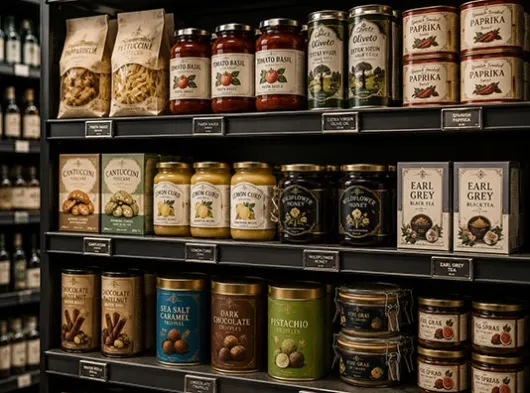
A single brand may offer multiple flavors, package sizes, seasonal products, limited editions, or products for different markets. While this creates more opportunities for growth, it also creates a challenge that many businesses underestimate: managing food labels across multiple SKUs.
Traditionally, companies would order thousands of labels at a time to reduce unit costs. On paper, this sounds like a smart decision. In reality, it often creates unnecessary inventory, ties up cash flow, and increases the risk of label waste.
For many startups and growing food manufacturers, small run food labels are becoming a more practical solution.
Why Multiple SKUs Create Label Challenges
As product lines expand, the number of labels required increases quickly.
A food company may have:
- Five flavors of the same product
- Three package sizes
- Different language versions
- Seasonal or promotional packaging
What started as one label design can quickly become dozens of different versions.
Many businesses continue ordering large quantities for every SKU because that has traditionally been the standard approach. However, this strategy often creates a new problem: too many labels sitting in storage waiting to be used.
The more SKUs a brand has, the greater the risk of overordering.
Modern Food Labels Are No Longer Static
Years ago, labels were mainly used to display branding and product information.
Today, food labels have a much bigger responsibility.
Many food manufacturers need labels that include:
- Batch numbers
- Production dates
- Expiration dates
- Lot codes
- Traceability information
- Updated nutrition facts
Food safety regulations and consumer expectations continue to increase. As a result, label information often changes more frequently than businesses expect.
When thousands of labels are printed in advance, even a small update can make existing inventory unusable.
This is one of the hidden costs of traditional large-volume label purchasing.
The Real Cost of Label Waste
Most businesses focus on the price per label.
However, the bigger cost is often the labels that never get used.
For example:
- A product formula changes
- A nutrition panel is updated
- Packaging artwork is refreshed
- A product underperforms and is discontinued
- Regulatory requirements change
In these situations, unused labels often end up being discarded.
What initially looked like a lower-cost purchase can become a much more expensive decision.
Why Small Run Food Labels Are Becoming More Popular
Small run labels allow businesses to purchase only the quantity they need for current production.
Instead of ordering thousands of labels for every SKU, brands can order labels based on actual demand.
- Lower upfront investment
- Reduced inventory risk
- Easier management of multiple SKUs
- Faster product launches
- Less waste
- Greater flexibility when product information changes
This approach is especially valuable for startups that are still testing products and building market demand.
How Digital Food Label Printing Makes This Possible
The growth of digital printing has completely changed the label industry.
Unlike traditional printing methods, digital food label printing does not require printing plates. This allows custom food labels to be produced efficiently in very small quantities.
For many projects, there is no minimum order quantity requirement.
Brands can order one SKU at a time, test new products, or launch limited-edition packaging without taking on unnecessary inventory risk.
A Smarter Approach for Growing Food Brands
For startups and small food manufacturers, every dollar matters.
Money spent on excess label inventory is money that cannot be invested in product development, marketing, or customer acquisition.
Small run food labels help brands stay flexible while reducing risk.
Instead of predicting demand months in advance, businesses can print labels as needed and scale production when sales increase.
Final Thoughts
Managing multiple SKUs has become a normal part of running a modern food business.
As food labels take on greater traceability and compliance responsibilities, flexibility becomes increasingly important.
Small run food labels produced through digital printing allow brands to reduce waste, improve inventory management, and launch products with less risk.
For many growing food brands, starting with small quantities is no longer just an option—it is often the smarter business decision.