Why Is Small Text Blurry on My Food Labels?
Learn why small text becomes blurry on food labels and how design preparation, printing technology, materials, and production control help maintain clear label details.
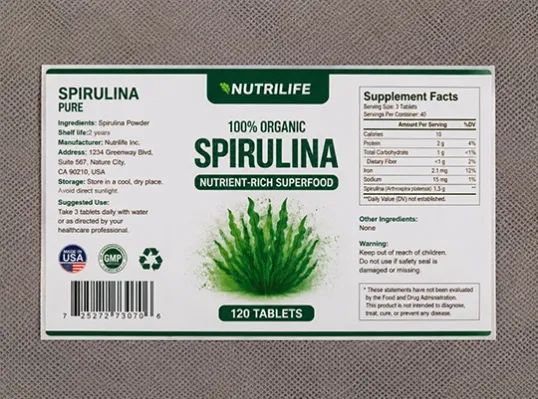
Small text is one of the most challenging elements to reproduce on a printed food label.
For many brands, the label design looks perfect on the computer screen. Nutrition facts, ingredient lists, product information, and other details appear sharp and easy to read.
However, after printing, some customers discover that small text looks blurry, unclear, or different from what they expected.
The first reaction is often:
"Is there a problem with the printing machine?"
Sometimes the answer is yes.
But in our experience, small text quality is usually affected by the entire process — from design preparation to file review, material selection, and production control.
This is why professional label printing requires more than simply receiving an artwork file and sending it to production.
Before printing begins, experienced label manufacturers look at the details that can affect the final result.
Because when it comes to small text, small mistakes can create big problems.
Clear Small Text Starts During the Design Stage
Many small text printing problems actually begin before the artwork reaches the printing machine.
A design file may look perfect on a computer screen, but some design choices may create challenges during production.
Common issues include:
- Font size being too small
- Extremely thin fonts
- Incorrect text handling in design files
- Unconverted fonts
- Transparency or layer effects that are difficult to reproduce
For food labels, small text is especially important because it often contains essential information such as:
- Ingredients
- Nutrition facts
- Allergen information
- Product instructions
- Compliance details
These elements need to remain clear and readable after printing.
This is why, when customers begin preparing label artwork, our team often provides recommendations to help avoid potential problems before production.
A small adjustment during the design stage can prevent much bigger issues later.
File Review Helps Identify Problems Before Printing
Many brands assume that once the artwork is completed, the file is ready for production.
However, professional label printing requires a production-focused review.
When customers send us their artwork, we don't only check whether the design looks attractive.
We also consider:
- Whether the font size is suitable for printing
- Whether fine details can be reproduced clearly
- Whether the file structure may cause unexpected results
- Whether any design adjustments can improve print quality
This process is especially valuable for customers who are unfamiliar with label printing requirements.
A designer may create an excellent visual design, but printing has its own technical limitations.
Our goal is to help connect creative design with practical production.
Printing Precision Directly Affects Small Text Quality
Even when the artwork is correctly prepared, printing accuracy still plays an important role.
Small text requires high printing precision because tiny details leave very little room for error.
Problems may occur when:
- Printing resolution is insufficient
- Fine lines cannot be accurately reproduced
- Ink edges become unclear
- Small details lose definition
Multi-color printing can create additional challenges.
If different colors are not precisely aligned during printing, small text may appear with:
- Blurred edges
- Color shadows
- Slight overlapping effects
For detailed food labels, even a small registration error can affect readability.
This is why professional label production requires proper equipment adjustment and quality control.
Label Materials Can Influence Text Sharpness
The label material itself can also affect how small text appears.
Different materials interact with ink differently.
Factors such as:
- Paper absorption
- Film surface characteristics
- Gloss or matte finishing
- Ink adhesion
can influence the final appearance.
For example, if ink spreads too much on a certain surface, small letters may lose their sharp edges.
Choosing a label material is not only about appearance.
It is also about how well the material supports the printing requirements.
Production Control Is Essential for Consistent Results
Even with the right design and materials, production conditions still matter.
Small text requires careful control during manufacturing.
Important factors include:
- Equipment calibration
- Ink stability
- Printing pressure
- Production speed
- Quality inspection
A file that prints clearly during testing may still experience problems if production conditions are not properly controlled.
This is why experienced label manufacturers pay special attention when producing labels with:
- Small fonts
- Fine lines
- Detailed graphics
- Complex packaging information
The goal is not only achieving a good first sample.
The goal is maintaining quality throughout the production run.
Why Working With an Experienced Label Partner Matters
Many small text problems can be prevented before printing starts.
A professional label supplier does not simply wait for problems to happen.
They help identify risks early.
From the beginning of a project, an experienced partner can support customers by:
- Reviewing artwork before production
- Suggesting design improvements
- Recommending suitable materials
- Adjusting production settings
- Monitoring quality during printing
This process reduces the chance of receiving labels that look different from expectations.
For brands, this means fewer delays, less waste, and more confidence in the final product.
Final Thoughts
Small text printing problems are rarely caused by one single factor.
Clear and readable food labels require cooperation between:
- Good artwork preparation
- Proper file setup
- Suitable materials
- Accurate printing processes
- Careful production control
A professional label manufacturer adds value long before the printing machine starts running.
By identifying potential problems early and controlling every step of the process, brands can achieve food labels that are not only visually attractive but also clear, accurate, and reliable.
Because when it comes to small text, every detail matters.