Oct 7, 2026Food Labels
Machine-Applied Custom Labels: What Information Should You Provide Before Printing?
If your custom labels will be applied by machine, the roll specifications need to match the labeling equipment used by your filling or packing facility.
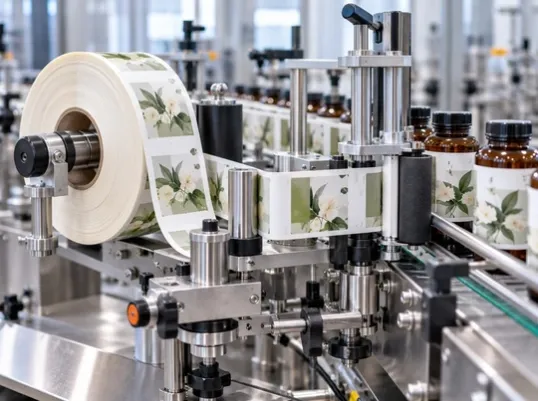
If your custom labels will be applied by an automatic labeling machine, there is one important step that should happen before label printing begins: confirming the roll specifications required by your filling or packing facility.
This may seem like a small technical detail, but it can directly affect whether the finished roll labels can run smoothly on the labeling machine.
Before production, we normally ask customers to confirm the following information.
1. Core Size
The core size is the inside diameter of the cardboard or plastic core that the label roll is wound around.
Different labeling machines may require different core sizes. If the core does not fit the machine properly, the roll may not be able to be mounted or run correctly.
For this reason, the core size should be confirmed with the company that will actually apply the labels.
2. Unwind Direction
The unwind direction determines how the labels come off the roll and which way the artwork faces when the roll is loaded onto the labeling machine.
This is especially important for machine-applied labels because the orientation of the label needs to match the applicator setup.
If the unwind direction is wrong, the labels may feed into the machine in the wrong orientation, even if the label size and artwork are otherwise correct.
3. Maximum Outer Roll Diameter
The maximum outer roll diameter refers to the largest finished roll size that the labeling machine can accept.
A larger roll can hold more labels, but not every machine has enough space for the same roll diameter.
If the finished roll is too large for the machine, it may not fit the applicator properly. That is why this specification should be confirmed before production rather than after the labels have already been printed.
4. Ask the Labeling Facility About Any Additional Requirements
Core size, unwind direction and maximum outer roll diameter are usually the main specifications we need to confirm, but some labeling machines may have additional requirements.
For example, the labeling facility may have its own preferences for roll configuration or other machine-specific details.
The safest approach is to ask the filling or labeling company directly:
“Do you have any specific requirements for the label rolls used on your labeling machine?”
This is an important question because the labeling facility knows its own equipment better than anyone else.
Why Do We Ask So Many Questions Before Printing?
Sometimes customers feel that we ask too many questions before starting a custom label printing order.
The reason is simple: we want to avoid preventable problems after production.
If the printed labels cannot be used on the customer's labeling machine, the customer may have to change from automatic labeling to manual application.
That can create additional labor costs, slow down production and cause unnecessary inconvenience.
For this reason, we prefer to confirm all important machine-application requirements before the order goes into production.
A few extra questions at the beginning can help prevent much bigger problems later.
Related Custom Label Solutions
Looking for custom labels for your products? Explore our label printing solutions:
For machine-applied labels, we can also help you confirm the roll specifications before production based on the requirements provided by your labeling facility.
Custom Labels for Different Order Volumes
AsiaBees provides custom label printing for both small and large production runs. We support different label materials, sizes, finishes and printing requirements for brands across a range of industries.
Need Help With Your Custom Labels?
If you are not sure which label material, adhesive, finish or roll specification is suitable for your product or labeling machine, send us your requirements. We can help you review the details before production.