Jul 30, 2026Food Labels
Digital vs Flexographic Printing: Which Is Better for Food Labels?
Compare digital and flexographic printing for food labels and learn which option fits your brand based on order quantity, SKU needs, design changes, cost, and production goals.
"Is digital printing better than flexographic printing?"
It sounds like there should be a simple answer.
Maybe one technology is newer, faster, or more advanced.
But after working with different food brands, we have learned that this is not the right way to compare them.
Digital printing and flexographic printing are not competing technologies where one replaces the other.
They are designed for different production situations.
The better question is:
"Which printing method fits my product stage, order volume, and future plans?"
A startup launching its first product has very different needs from an established food company producing hundreds of thousands of units every year.
A brand testing several flavors may value flexibility more than the lowest label cost.
A successful product with stable demand may prioritize production efficiency and lower unit pricing.
Digital and Flexographic Printing Solve Different Problems
Before comparing the two methods, it is important to understand that they are built around different production models.
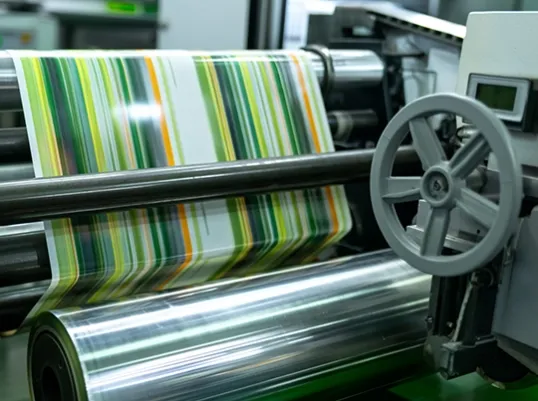
Digital label printing focuses on flexibility.
It allows brands to produce smaller quantities, manage multiple designs, and make changes quickly.
Flexographic printing focuses on efficiency at scale.
It becomes more advantageous when production quantities are high and product demand is stable.
Neither method is automatically better.
The correct choice depends on:
- Order quantity
- Number of SKUs
- Product lifecycle
- Design change frequency
- Budget
- Production timeline
Choosing the wrong printing method can create unnecessary costs.
Choosing the right one can support the growth of a food brand.
When Digital Printing Is Better for Food Labels
For many startup and growing food brands, digital label printing provides a practical solution.
The biggest advantage is flexibility.
Digital printing does not require traditional printing plates.
This reduces preparation time and makes smaller orders more economical.
It is especially suitable for:
- New product launches
- Market testing
- Seasonal products
- Limited editions
- Multiple SKU labels
- Small batch food labels
- Products with frequent design updates
For example, a new snack brand may launch five flavors at the same time.
At this stage, the company may not know which flavor will become the bestseller.
Printing large quantities of every label version creates unnecessary inventory risk.
With digital printing, the brand can produce smaller quantities, test customer response, and adjust future orders based on actual demand.
This flexibility is one of the biggest reasons digital printing has become popular among startup food brands.
Digital Printing Supports Faster Design Changes
Food brands change more often than many people expect.
A company may need to update:
- Ingredients
- Nutrition information
- Packaging design
- Promotional messages
- Barcode information
- Seasonal artwork
With traditional printing methods, design changes may require additional preparation.
Digital printing makes these changes easier because there is no need to create new printing plates for every version.
This makes it especially valuable for brands that are still developing their products and learning from the market.
For early-stage companies, flexibility can be more valuable than achieving the lowest possible label price.
When Flexographic Printing Is Better for Food Labels
While digital printing provides flexibility, flexographic printing has important advantages for large-scale production.
For established food products with predictable demand, flexographic printing often becomes the more economical choice.
It is especially suitable for:
- Large volume orders
- Long-term repeat products
- Stable artwork
- High production efficiency
- Lower unit costs at scale
Although flexographic printing requires more preparation, including plate production and setup, these costs can be spread across a large production volume.
When a company produces hundreds of thousands or millions of labels with the same design, the lower unit cost can become a significant advantage.
For example:
A food brand selling one popular sauce product nationwide may benefit more from flexographic printing than digital printing because demand is stable and the same label is used continuously.
The Biggest Difference Is Not Quality—It Is Flexibility vs Scale
One common misunderstanding is that digital printing means lower quality.
That is no longer true.
Modern digital label printing can produce professional-quality:
- Detailed graphics
- Small text
- Barcodes
- Multiple designs
- Variable information
Flexographic printing also provides excellent quality, especially for large production runs requiring consistent output.
The biggest difference between the two methods is not simply print quality.
It is the production model.
Digital printing is optimized for:
- Flexibility
- Small quantities
- Multiple versions
- Fast changes
Flexographic printing is optimized for:
- Scale
- Efficiency
- Long production runs
- Lower cost per label
Understanding this difference helps brands make better decisions.
Multiple SKUs Often Make Digital Printing More Attractive
Many modern food brands use multiple SKUs as part of their growth strategy.
Different flavors.
Different sizes.
Limited editions.
Seasonal products.
This creates more marketing opportunities.
However, every SKU also creates another label inventory requirement.
A brand with ten products may not want to purchase thousands of labels for every version before understanding customer demand.
This is where digital printing provides an advantage.
Multiple designs can be produced in smaller quantities without requiring separate plate preparation for every SKU.
For brands managing many products, this flexibility can significantly reduce inventory pressure.
As Your Brand Grows, Your Printing Method Can Change
Choosing digital or flexographic printing is not a permanent decision.
A growing food brand may start with digital printing.
At this stage, the priorities may be:
- Low MOQ
- Fast launch
- Multiple SKUs
- Design flexibility
As one product becomes successful and demand becomes predictable, the brand can reconsider flexographic printing.
At that point, priorities may change:
- Lower unit cost
- Higher production efficiency
- Stable repeat orders
The best printing method can change as the business develops.
A smart label strategy grows together with the brand.
How to Choose the Right Printing Method for Your Food Labels
Before deciding between digital and flexographic printing, consider:
Choose Digital Printing If:
- You are launching a new product
- Your order quantity is small
- You have multiple SKUs
- Your design may change
- You need faster turnaround
- You are testing the market
Choose Flexographic Printing If:
- Your product sales are stable
- You need large quantities
- Your artwork rarely changes
- You want the lowest unit cost at high volume
- You have long-term repeat production
The correct choice is not about choosing the most advanced technology.
It is about choosing the technology that matches your current business situation.
Why Professional Label Advice Matters
Many brands compare printing methods only by price.
However, a professional label supplier should consider the entire project.
Questions such as:
- How many labels do you need?
- How many SKUs are involved?
- How often will the design change?
- What is your expected growth?
- How quickly do you need the labels?
can completely change the recommended solution.
A good supplier does not simply recommend the cheapest option.
They recommend the option that creates the best overall value.
Final Thoughts
So, which is better for food labels: digital printing or flexographic printing?
The answer depends on your brand stage.
Digital printing is often the better choice for startups, small batch production, multiple SKUs, and products that require flexibility.
Flexographic printing is often the better choice for large-volume, stable products where production efficiency and unit cost are priorities.
Neither technology is better in every situation.
The best food label printing solution is the one that matches your product, quantity, and business strategy.
Need Help Choosing Digital or Flexographic Printing?
Not sure which printing method fits your food label project?
Tell us your quantity, number of SKUs, artwork stability, and production plans. We can help recommend a suitable printing solution.
📧 Email: info@asiabees.com